5 Types of Nigerian Students Most Likely to Get UK Visa Refusal
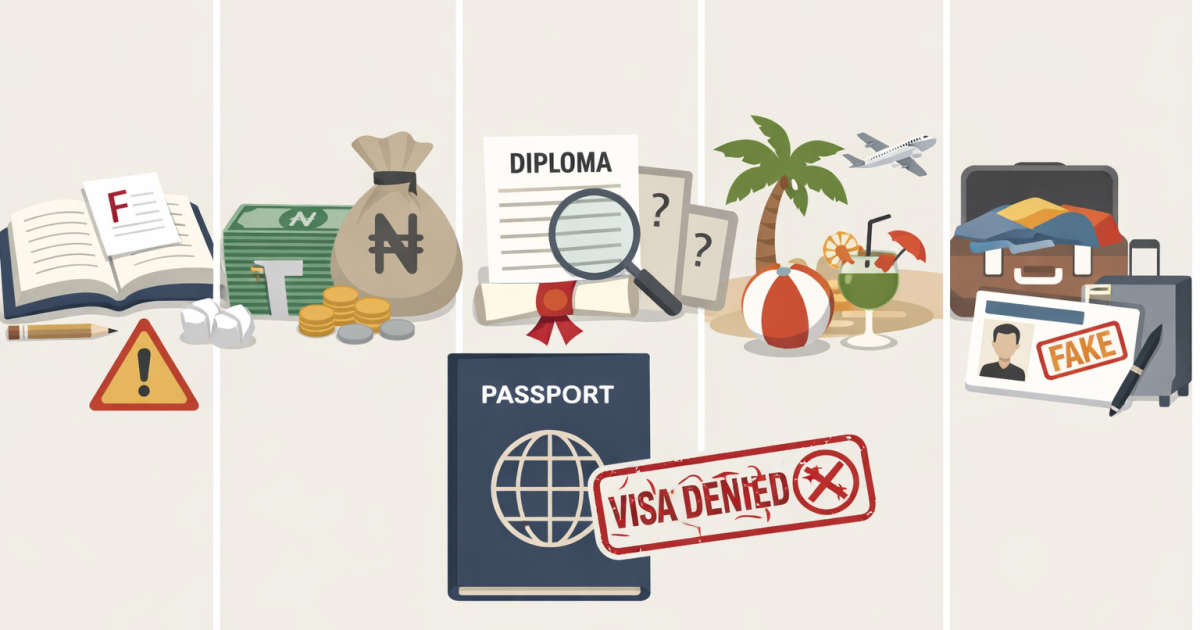
Table of Content
1. Why Some Nigerian Students Get Refused UK Visas
2. Students With Weak Financial Documentation
3. Students Who Choose Courses That Do Not Match Their Background
4. Students With Poorly Prepared Personal Statements
5. Students Who Cannot Clearly Explain Their Study Intentions
6. Students Who Ignore Immigration Rules and Compliance Requirements
7. Building a Stronger Application Strategy for UK Study Success
1. Why Some Nigerian Students Get Refused UK Visas
Every year, many Nigerian students apply to study in the UK with genuine intentions. However, visa refusal still happens, often because applicants do not understand what UK visa officers are actually assessing.
UK student visa decisions are typically based on three major factors: financial credibility, academic credibility, and immigration credibility. If any of these areas appear weak or inconsistent, refusal becomes likely.
Many of these problems can be avoided with proper preparation and guidance. Understanding the real refusal patterns explained here: Common UK Visa Rejection Reasons (and How to Avoid Them).
Before applying, serious students should also complete a proper eligibility review through Initial Eligibility Check.
This helps identify risks early and prevents costly mistakes.
2. Students With Weak Financial Documentation
One of the fastest ways to get refused is presenting financial documents that do not meet UKVI standards.
Common financial mistakes include:
• Sudden large deposits without explanation
• Using accounts that do not belong to the sponsor
• Submitting incomplete bank statements
• Using business accounts incorrectly
• Funds not maintained for the required period
The UK government requires clear proof that a student can genuinely afford tuition and living costs. Any doubt about the source or stability of funds raises credibility concerns.
Understanding the financial requirements explained here: How Much Bank Balance Is Required for UK Student Visa.
Students should also understand documentation standards through Acceptable Bank Statements for UK Student Visa.
Financial planning is not just about having money. It is about proving the money is legitimate, traceable, and compliant.
3. Students Who Choose Courses That Do Not Match Their Background
Another major refusal category involves students choosing courses that do not logically connect to their previous education or work experience.
Examples include:
• A banking graduate suddenly applying for a nursing degree without explanation
• A science graduate applying for unrelated arts programmes
• Mature applicants changing fields without career justification
Course selection must show progression, not confusion.
Students should first understand global demand through Top UK Courses in Demand for Nigerian Students – Guide to High-Return Study Paths.
They should also review course selection strategy explained in How to Choose the Right University & Course Abroad Based on Global Job Demand (Tech, Healthcare, Business, STEM, Trade).
Visa officers must see that your education makes sense as part of your career development.
4. Students With Poorly Prepared Personal Statements
A weak Statement of Purpose is one of the most overlooked reasons Nigerian students get refused.
Common SOP problems include:
• Generic templates copied from the internet
• No clear career direction
• No explanation of course relevance
• No explanation of sponsor relationship
• No explanation of academic gaps
A strong SOP explains three things clearly:
• Why this course
• Why this university
• How it fits your career plan
Students should study proper SOP structure here: How to Write a Strong Statement of Purpose (SOP) That Gets University Admission (With Examples).
Professional guidance can also significantly improve outcomes through UK Study Advisory.
Your SOP is not just a document. It is your credibility story.
5. Students Who Cannot Clearly Explain Their Study Intentions
Visa officers are trained to identify applicants who appear more interested in relocation than education.
Warning signs include:
• Overemphasis on work instead of study
• No clear academic motivation
• Unrealistic career plans
• Poor interview responses when interviewed
Students must demonstrate they understand that study is the primary purpose of the visa.
Understanding visa expectations explained in Step-by-Step Guide to Getting a UK Student Visa.
Students should also understand what officers evaluate through The Three Things UK Student Visa Officers Care About Most (2026 Guide for Nigerians).
Clarity of purpose reduces suspicion.
6. Students Who Ignore Immigration Rules and Compliance Requirements
Some students apply without understanding compliance responsibilities.
This includes lack of awareness about:
• Work hour limits
• Attendance requirements
• Academic progression rules
• Immigration reporting duties
Students who appear unaware of these rules may appear unprepared for compliance.
Understanding compliance expectations through UK University Attendance Rules Nigerian Students Must Not Ignore.
Students must also understand work restrictions explained in Working More Than 20 Hours: Real Consequences for Nigerian Students in the UK.
Proper preparation reduces risk.
Applicants should complete a compliance readiness review through Initial Eligibility Check.
7. Building a Stronger Application Strategy for UK Study Success
Visa success is rarely accidental. Strong applicants usually prepare in four areas:
• Financial credibility
• Academic progression
• Career clarity
• Immigration awareness
Students who succeed usually start early, get professional guidance, and correct weaknesses before applying.
Many refusal cases could have been prevented through structured preparation.
Serious applicants should consider expert review through UK Study Advisory.
If you are planning UK study, the smartest step you can take is identifying risks before submission. A proper advisory review can help you avoid refusal, protect your investment, and improve your long-term study outcome.
Frequently asked questions
Yes. However, the new application must correct the exact refusal reasons. Reapplying without fixing the issues usually leads to another refusal.
No. Admission and visa approval are separate decisions. The visa decision focuses on credibility and compliance.
Yes, if financial documentation meets UKVI standards and the relationship is clearly documented.
Yes. If your study purpose is unclear, officers may doubt your academic intentions.
Refusal happens mostly when applications contain avoidable errors, not because of nationality.