Student Accommodation in Ireland
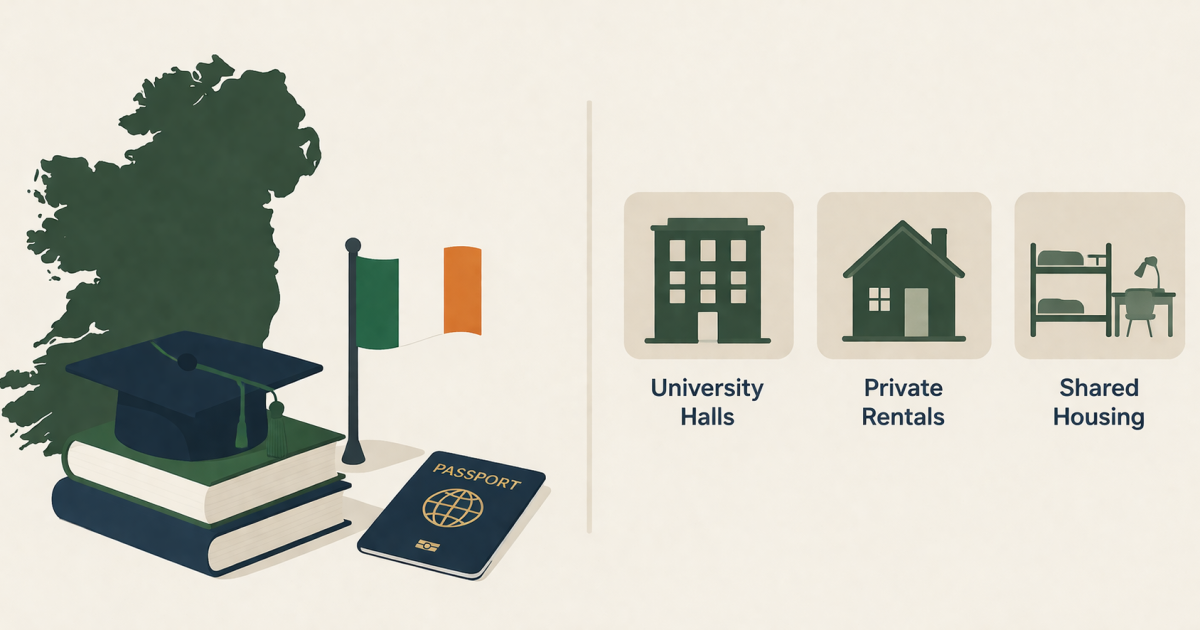
Table of Content
1. Understanding Student Accommodation in Ireland
2. Types of Student Housing Available in Ireland
3. Average Accommodation Costs Nigerian Students Should Expect
4. When Nigerian Students Should Start Searching for Housing
5. Common Accommodation Mistakes Nigerian Students Should Avoid
6. How Accommodation Affects Ireland Visa Compliance
7. Making Smart Housing Decisions Before Departure
1. Understanding Student Accommodation in Ireland
Securing accommodation is one of the most important parts of studying in Ireland. Housing shortages exist in many Irish cities, particularly Dublin, which makes early planning essential for Nigerian students.
Accommodation planning is not only about comfort. It also affects visa credibility, financial planning, and settlement stability after arrival.
Students who understand the full Ireland study process usually make better housing decisions. For a complete overview, students should review the Complete Guide to Studying in Ireland for Nigerian Students (Requirements, Costs, Visa Process and Planning).
Students unsure whether their study plans are realistic should begin with a structured review through the Initial Eligibility Check.
2. Types of Student Housing Available in Ireland
Irish student accommodation typically falls into four main categories:
- University accommodation:
This is usually the safest option for first year international students. These may include on campus residences or university managed apartments.
- Private student residences:
These are professionally managed student apartments with shared kitchens and private rooms.
- Shared apartments:
Students rent rooms in shared apartments with other students or professionals. This option may reduce costs but requires careful verification.
- Host family accommodation:
Some students choose homestay arrangements, particularly during their first months.
Choosing the right housing option should align with a student’s financial capacity and long term settlement plans. Students should also understand study routes before choosing cities by reviewing Ireland Study Pathways Explained for Nigerian Students.
3. Average Accommodation Costs Nigerian Students Should Expect
Housing costs depend heavily on location.
Average monthly estimates:
- Dublin: €700 to €1,500
- Cork: €600 to €1,100
- Galway: €550 to €1,000
- Limerick: €500 to €900
Students must also prepare for:
- Security deposits equal to one or two months rent
- Utility contributions
- Internet subscriptions
- Transportation costs if living outside city centres
Students planning accommodation should also understand total financial commitments through Total Cost of Studying in Ireland for Nigerian Students (Tuition, Living Cost and Financial Planning).
4. When Nigerian Students Should Start Searching for Housing
Students should begin accommodation searches immediately after receiving admission offers.
Recommended timeline:
6 to 8 months before resumption:
- Research housing options
- Understand city rental markets
- Join verified student housing platforms
3 to 5 months before resumption:
- Apply for university accommodation
- Secure temporary accommodation if needed
- Prepare housing deposits
Last minute accommodation searches often result in higher prices or unsafe rental decisions.
Students preparing admission documentation should also review Admission Requirements for Nigerian Students Applying to Irish Universities.
5. Common Accommodation Mistakes Nigerian Students Should Avoid
Several housing errors repeatedly affect Nigerian students:
- Paying deposits without verified contracts
- Relying on social media listings without verification
- Ignoring distance from campus
- Underestimating utility costs
- Waiting too late to secure housing
Students should never transfer money without proper documentation and confirmed property verification.
Students unsure whether Ireland fits their academic and financial situation should review Who Should Study in Ireland? A Guide for Nigerian Students and Sponsors.
Professional guidance can reduce accommodation risks. Students may consider Ireland Study Advisory.
6. How Accommodation Affects Ireland Visa Compliance
Accommodation planning can influence visa approval indirectly.
Visa officers expect students to demonstrate:
Clear settlement plans
Realistic financial capacity
Understanding of living costs
Structured relocation preparation
Accommodation plans also affect financial calculations required for visa approval.
Students should understand the full visa preparation process through Ireland Student Visa Process for Nigerian Students (D Visa Application Guide)
Students wanting to confirm whether their plans meet visa and financial expectations should complete the Initial Eligibility Check.
7. Making Smart Housing Decisions Before Departure
Students who secure accommodation early usually experience smoother transitions after arrival.
Smart decisions include:
- Choosing temporary accommodation if permanent housing is unavailable
- Budgeting realistically
- Avoiding emotional decisions under pressure
- Working with verified advisory support
Ireland study success often depends on preparation quality rather than luck.
Students who want professional Ireland planning support can begin through Ireland Study Advisory.
Students ready to proceed with structured admission and relocation support can start here.
Students who want to confirm if their study plans, finances, and relocation strategy are realistic should begin here through the Initial Eligibility Check.
Frequently asked questions
No. Most universities have limited housing. Students should always prepare alternative options.
Usually one or two months rent depending on landlord requirements.
Students may secure conditional accommodation or temporary housing but should avoid long term financial commitments before visa approval.
Dublin has the most opportunities but also the highest housing costs. Some students benefit from studying in smaller cities.
Yes, eligible students can work within permitted hours. However, housing costs should never depend entirely on part time work.