Understanding Canada’s Study System
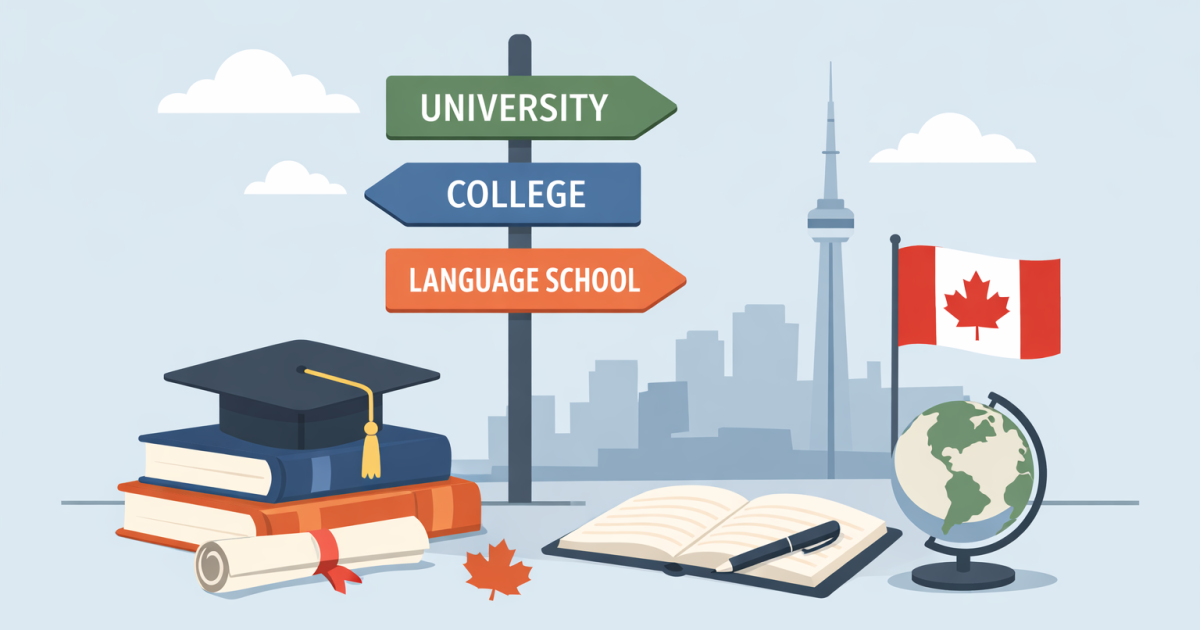
Table of Content
1. Why Nigerian Students Compare Diploma vs Foundation
2. Major Study Pathways Available to Nigerian Students
3. Direct University Admission Requirements
4. College Diploma and Advanced Diploma Routes
5. Postgraduate Study Options in Canada
6. Foundation and Pathway Programmes
7. Work Rules and Compliance Requirements
8. Choosing the Right Study Route Based on Your Profile
9. Final Planning Strategy: How to Avoid Costly Mistakes
1. Understanding Canada’s Study System
Canada remains one of the most structured education destinations available to Nigerian students. However, many applicants misunderstand how the system works and end up choosing the wrong study pathway. This mistake alone accounts for many study permit refusals.
Canada does not operate a one-size-fits-all admission system. Your academic background, budget, career direction, and long-term immigration plans must determine the correct route.
Many Nigerian applicants are wrongly advised to apply randomly to universities without understanding whether their academic history supports direct admission, whether a college route is more realistic, or whether a postgraduate certificate provides a better visa strategy.
Before choosing any pathway, it is important to properly assess your profile through a structured review such as the Initial Eligibility Check.
This helps prevent expensive application errors.
2. Major Study Pathways Available to Nigerian Students
Canada offers several legitimate academic routes. The correct option depends on your qualifications and career direction.
The main pathways include:
• Direct undergraduate university admission
• College diploma programmes
• Advanced diplomas
• Postgraduate certificates
• Master’s degrees
• Foundation or pathway programmes
Each option carries different admission difficulty levels, tuition costs, and visa expectations.
Students often assume university is always the best option. This is not always correct. In many cases, colleges provide stronger visa outcomes because they demonstrate clearer career progression.
Proper pathway selection usually requires structured advisory planning such as the Canada Study Advisory.
3. Direct University Admission Requirements
Direct university admission is usually suitable for:
• Students with strong WAEC results
• Students with A Levels or equivalent
• Students with strong undergraduate GPAs
• Students pursuing academic or research careers
Typical undergraduate requirements include:
• WAEC results with strong grades
• English proficiency (IELTS usually required)
• Personal statement
• Academic transcripts
• Reference letters in some cases
For Master’s programmes:
• Bachelor’s degree
• Minimum GPA requirement
• IELTS requirement
• Statement of purpose
• Academic references
University tuition is usually higher than college tuition. For Nigerian students this typically ranges between CAD 17,000 to CAD 35,000 annually depending on programme and institution.
Students should only choose this route if it fits both academic strength and financial capacity.
4. College Diploma and Advanced Diploma Routes
Canadian colleges are often misunderstood in Nigeria. Many students wrongly believe colleges are inferior to universities. This is incorrect.
Colleges in Canada provide:
• Career-focused education
• Industry aligned programmes
• Practical training
• Post graduation work permit eligibility when approved institutions are chosen
Diploma programmes typically last:
• 2 years for diplomas
• 3 years for advanced diplomas
These programmes often lead to:
• Skilled employment
• Immigration eligibility through Canadian work experience
• Opportunity to later upgrade to degree programmes
For many Nigerian applicants, this route provides a more realistic admission and visa pathway compared to competitive universities.
Proper school selection remains critical. Random college selection can weaken visa credibility.
5. Postgraduate Study Options in Canada
Postgraduate certificates are one of the most common study routes Nigerian graduates choose.
These programmes are typically:
• 1 to 2 years in duration
• Professionally focused
• Designed to complement existing degrees
Examples include:
• Project Management
• Healthcare Administration
• Business Analytics
• Supply Chain Management
• Information Technology
This route is often recommended when:
• Your previous degree does not qualify for direct Master’s admission
• You want career focused training
• You want faster entry into the labour market
However, programme relevance is critical.
If your postgraduate programme does not logically connect to your previous education or work experience, visa officers may question your study intent.
Professional planning through the Canada Study Advisory can help structure this correctly.
6. Foundation and Pathway Programmes
Foundation or pathway programmes are designed for students who do not yet meet direct admission requirements.
These may be suitable if:
• Your WAEC grades are weak
• You lack required mathematics subjects
• Your GPA does not meet Master’s admission standards
• You need academic upgrading
Pathway programmes help students transition into:
• Undergraduate programmes
• College diplomas
• Some postgraduate programmes
However, students must be careful. Not all pathway programmes strengthen visa applications. Some can actually weaken your profile if they do not clearly show academic progression.
This is why admission strategy should always be based on profile logic, not agent convenience.
7. Work Rules and Compliance Requirements
Many Nigerian students misunderstand Canadian work rules.
Study permits normally allow:
• Up to 20 hours per week during academic sessions
• Full time work during scheduled breaks
Students must understand:
• Work cannot replace proof of funds
• Immigration expects financial readiness before arrival
• Working illegally can affect future permits
Understanding these rules before applying is essential. This prevents compliance mistakes.
8. Choosing the Right Study Route Based on Your Profile
The correct study route should answer three questions:
Academic question:
Does this programme logically match your previous education?
Financial question:
Can you realistically afford tuition and living expenses?
Immigration question:
Does this pathway strengthen your long-term career direction?
Students who answer these correctly usually avoid visa refusal.
Students who ignore these factors often:
• Choose irrelevant courses
• Apply to unsuitable schools
• Present weak financial structure
• Create inconsistent academic narratives
Strategic planning is always safer than trial and error, this allows proper planning before committing large funds.
9. Final Planning Strategy: How to Avoid Costly Mistakes
The biggest mistake Nigerian students make is choosing schools before choosing strategy.
Admission should never come before planning.
A strong Canada study plan should always follow this order:
- Profile assessment
- Pathway selection
- School selection
- Financial planning
- Document preparation
- Visa strategy
Students who follow this structure usually experience smoother applications.
Students who skip this structure often experience refusals that could have been avoided.
If you want to approach your Canada study plans professionally, start with proper advisory guidance through the Canada Study Advisory.
Frequently asked questions
This depends on your career goals, finances, and immigration plans. Canada may offer stronger long term immigration opportunities. The UK may offer faster degree completion timelines.
Some institutions allow alternatives, but most Nigerian applicants are still required to show English proficiency.
Students typically need:
• First year tuition
• Living expenses (minimum CAD 10,000 outside Quebec)
• Travel costs
• Miscellaneous expenses
Exact figures vary by province.
Only during scheduled breaks. During study periods, work is limited.
No. Only designated learning institutions and eligible programmes qualify.