What Happens If You Fail Modules on a UK Student Visa
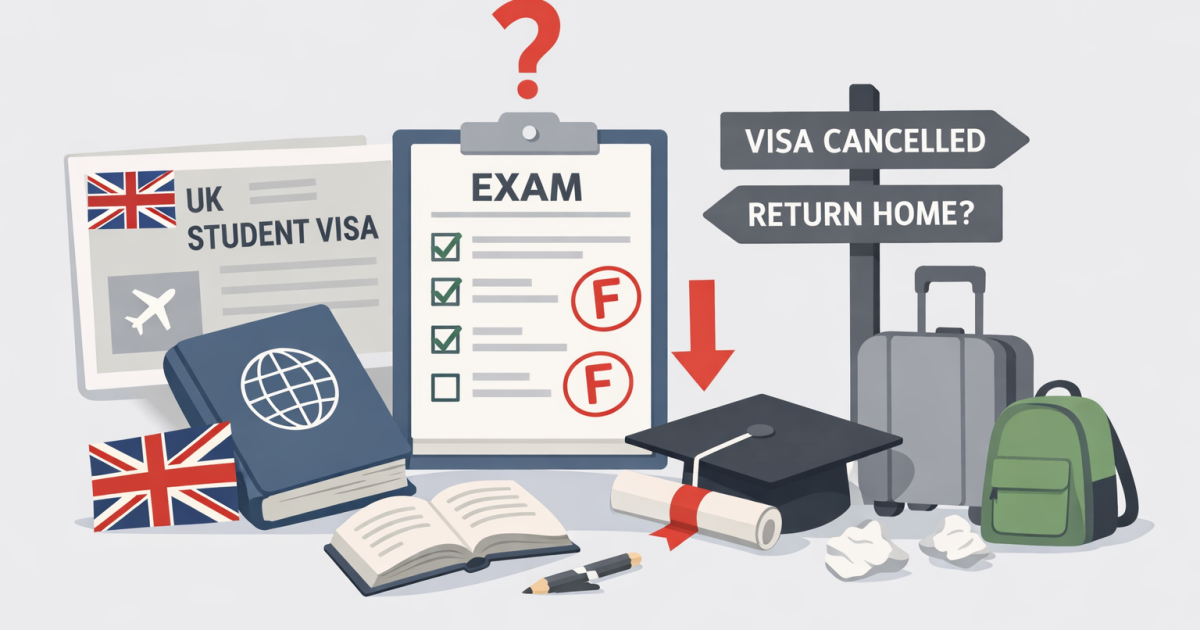
Table of Content
1. Why Failing Modules Is a Bigger Issue for Nigerian Students
2. What Failing a Module Actually Means in the UK System
3. How UK Universities Report Academic Failure to UKVI
4. Resits, Retakes, and Academic Probation Explained
5. When Failing Modules Becomes a Visa Compliance Problem
6. Can You Change Course or University After Failing Modules?
7. What to Do Immediately If You Fail a Module
8. Protecting Your Future: Staying Lawful and Avoiding Curtailment
1. Why Failing Modules Is a Bigger Issue for Nigerian Students
For many Nigerian students in the UK, failing a module feels like an academic setback that can be fixed later. In reality, academic performance in the UK is directly connected to immigration compliance. Your university is not just an academic institution, it is also your visa sponsor.
Once you are issued a Confirmation of Acceptance for Studies, your sponsor is legally required to monitor your attendance, engagement, and progression. Failing modules, especially repeatedly, can trigger reporting obligations that affect your visa status.
Many Nigerian students only find out the seriousness of this issue when they receive emails about academic review panels, sponsorship concerns, or visa curtailment. By that stage, options are already limited.
This guide explains exactly what happens if you fail modules on a UK student visa, what your university must report, and how to respond correctly. If you are unsure whether your course choice or academic history already puts you at risk, you should review the Initial Eligibility Check before problems escalate.
2. What Failing a Module Actually Means in the UK System
In the UK, failing a module does not automatically mean you have failed the entire course. Most courses are modular, and each module carries specific credits.
A failed module usually means one of the following:
You did not meet the minimum pass mark for that module.
You did not submit required coursework or exams.
You breached assessment rules such as plagiarism.
Universities usually allow one resit attempt. A resit may be capped at a pass mark and may take place during the summer or next academic session. At this stage, failing a single module is still considered an academic issue, not an immigration issue.
However, problems arise when failed modules affect your ability to progress to the next academic stage. This is when visa compliance comes into focus, especially for international students.
Academic progression is a key condition of your visa. If progression is blocked, your sponsor must reassess your status. This is why Nigerian students must understand attendance and academic rules in detail, as explained in UK University Attendance Rules Nigerian Students Must Not Ignore.
3. How UK Universities Report Academic Failure to UKVI
UK universities are legally required to report certain events to UK Visas and Immigration. These include failure to progress, extended absence, and withdrawal from studies.
If you fail enough modules to require repeating a year, suspending studies, or withdrawing, your university must assess whether they can continue sponsoring you. In many cases, sponsorship is withdrawn if progression is no longer continuous.
Once sponsorship is withdrawn, UKVI is notified. This can lead to a curtailment of your visa, usually giving you 60 days to leave the UK or make a new valid application.
This reporting system is automatic and procedural. It is not personal, and it is not negotiable once triggered. Nigerian students often assume universities can overlook issues, but sponsorship duties are enforced strictly.
To understand how reporting affects your stay, read UK Student Visa Curtailment Explained: What Nigerian Students Must Do.
4. Resits, Retakes, and Academic Probation Explained
When you fail modules, universities may place you in one of several academic positions.
A resit allows you to retake an assessment without re-enrolling in the module. A retake usually requires repeating the entire module, sometimes with attendance. Academic probation is a warning period where your performance is monitored closely.
From a visa perspective, resits are usually safe if they do not extend your course end date significantly. Retakes that extend your studies can be problematic if they push you beyond the maximum study period allowed.
If you are required to repeat a year, some universities cannot sponsor you further. This depends on institutional policy and UKVI rules.
Nigerian students must also be careful during resit periods, as working more than permitted hours while not actively studying can breach visa conditions. For clarity, review What Counts as Illegal Work for Nigerian Students in the UK.
5. When Failing Modules Becomes a Visa Compliance Problem
Failing modules becomes an immigration issue when it affects your ability to study full-time continuously.
This includes situations where:
You cannot progress to the next academic year.
You are required to take a break from studies.
You exceed the maximum length of study.
Your sponsor withdraws CAS support.
At this stage, your visa can be curtailed even if you are still physically attending classes. Many Nigerian students are shocked to receive curtailment emails while still on campus.
If you are already financially strained, failing modules can worsen the situation due to extra tuition fees, living costs, and limited work rights. This often links to broader challenges explained in Why Nigerian Students Run Out of Money in the UK (Real Reasons).
6. Can You Change Course or University After Failing Modules?
In some cases, Nigerian students can switch courses or universities after failing modules, but this is not guaranteed.
A change of course within the same institution may be allowed if academic staff approve and progression rules are met. Changing universities usually requires a new CAS and a fresh visa application.
If your current sponsor has withdrawn support, you must act quickly. You cannot remain in the UK indefinitely while searching for options. Timing is critical, and mistakes can lead to overstaying.
For a detailed breakdown, read Can Nigerian Students Change Course or University After Arrival in the UK?
Before making any move, it is strongly advised to speak with professionals through the UK Study Advisory, especially if your situation involves academic failure and visa timelines.
7. What to Do Immediately If You Fail a Module
If you fail a module, do not panic and do not ignore emails from your university.
First, speak to your academic adviser or course leader. Understand whether this is a resit, retake, or progression issue. Request written confirmation of your status.
Second, contact your university’s international student support team. Ask how your situation affects sponsorship.
Third, review your visa conditions carefully, especially work limits and attendance requirements during resits.
Finally, assess whether your original study plan is still viable. Many Nigerian students realise too late that they were academically or financially unprepared from the start. The Initial Eligibility Check can help identify whether continuing is realistic or whether a controlled exit and reapplication is safer.
8. Protecting Your Future: Staying Lawful and Avoiding Curtailment
Failing modules does not automatically end your UK journey, but mishandling the situation can.
The biggest mistakes Nigerian students make include ignoring academic warnings, overstaying after sponsorship withdrawal, working illegally during resits, and making rushed visa applications without guidance.
A failed module should trigger strategic thinking, not fear. In some cases, transferring, reapplying, or even returning home temporarily is the smartest long-term decision.
If you want personalised guidance that considers your academics, visa history, and financial position, book a session through the UK Study Advisory. This is where difficult situations are handled with clarity and structure.
Frequently asked questions
No. A single failed module usually leads to a resit. Visa issues arise when progression is affected.
UKVI acts based on reports from your university. If sponsorship is withdrawn, visa curtailment can follow.
Usually yes, but only within permitted hours and only if you are still considered a full-time student.
You must either leave within the given period or submit a valid new application. Overstaying has serious consequences.