How Nigerian Students Switch from UK Student Visa to Work Visa
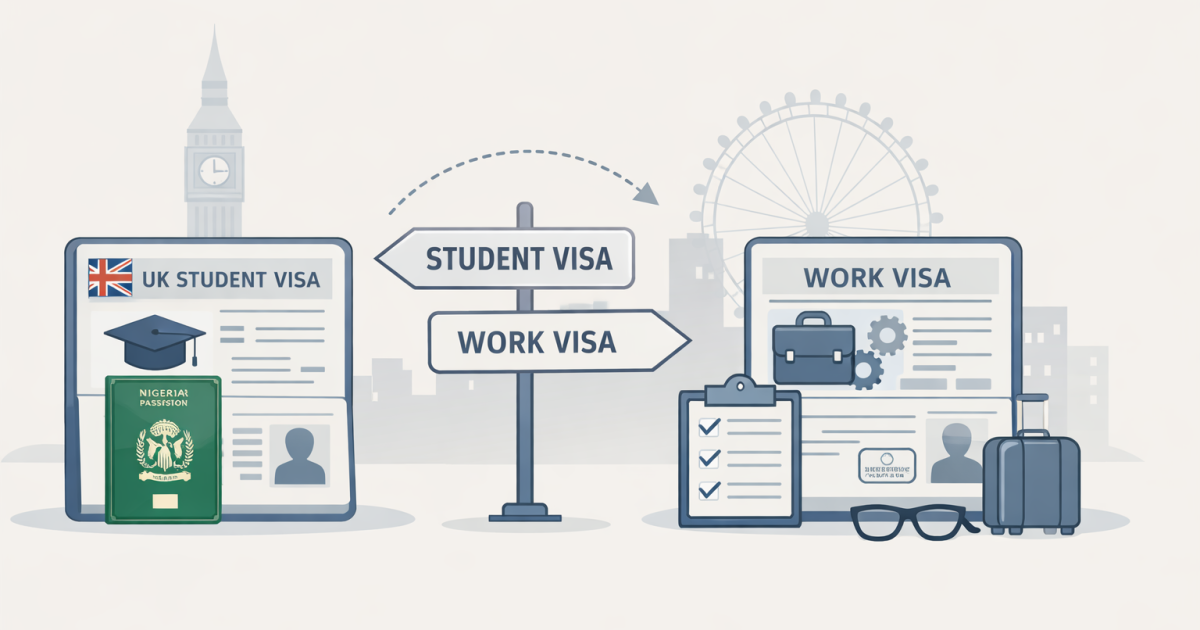
Table of Content
1. Why the Student to Work Visa Switch Matters
2. Understanding the Main UK Work Visa Options for Nigerian Students
3. The Graduate Route: What It Is and Who Qualifies
4. Switching to a Skilled Worker Visa While Still in the UK
5. Timing Rules Nigerian Students Must Not Ignore
6. Common Mistakes That Block Student to Work Visa Transitions
7. How Your University, Employer, and UKVI Interact
8. Building a Lawful Long Term Work Strategy After Study
1. Why the Student to Work Visa Switch Matters
For many Nigerian students, studying in the UK is not just about earning a degree. It is also about gaining international work experience, building a career, and creating long term stability. This makes the transition from a UK student visa to a work visa one of the most important immigration steps you will ever take.
Unfortunately, many students misunderstand the process. Some assume a job offer automatically leads to a work visa. Others miss deadlines or breach student visa rules, which later blocks their ability to switch legally.
UK Visas and Immigration treats the student to work transition as a compliance sensitive process. Every detail matters, including attendance, work hours, timing, and course completion status.
If you are still early in your journey or unsure whether your current path supports future work options, it is wise to begin with the Initial Eligibility Check to assess risks before they become irreversible.
2. Understanding the Main UK Work Visa Options for Nigerian Students
Nigerian students generally have two main pathways to move from a student visa to working legally in the UK.
The first is the Graduate Route, often called the post study work visa. This allows eligible graduates to remain in the UK to work without employer sponsorship for a limited period.
The second is the Skilled Worker visa, which requires a licensed UK employer to sponsor you for an eligible role that meets salary and skill requirements.
Choosing the wrong path or misunderstanding eligibility can lead to refusal or overstaying. Students must plan early, especially when choosing courses that align with employability. This is why course selection guidance such as Top UK Courses in Demand for Nigerian Students – Guide to High-Return Study Paths is critical.
3. The Graduate Route: What It Is and Who Qualifies
The Graduate Route allows Nigerian students who successfully complete an eligible UK degree to stay and work in the UK for two years, or three years for PhD graduates.
You do not need a job offer to apply. However, you must have completed your course successfully, and your university must have reported your completion to UKVI.
A key mistake students make is assuming completion means finishing exams. In reality, the university must formally confirm completion. Applying too early leads to refusal.
While on the Graduate Route, work is flexible, but immigration compliance still matters. Overworking during your student visa before switching can damage your record. To understand limits, review Working More Than 20 Hours: Real Consequences for Nigerian Students in the UK.
4. Switching to a Skilled Worker Visa While Still in the UK
Some Nigerian students choose to move directly from a student visa to a Skilled Worker visa without using the Graduate Route.
This requires a job offer from a UK employer that holds a sponsorship licence. The role must meet skill level and salary thresholds set by UKVI.
The advantage of this route is long term settlement potential. The disadvantage is that sponsorship is competitive and employers are selective.
Students often underestimate how early preparation must begin. Networking, internships, and part time roles play a major role. Guidance such as How Nigerian Students Get Jobs Fast After Arrival in the UK helps students position themselves correctly.
Before committing to this route, professional assessment through the UK Study Advisory is strongly recommended, especially if your academic or visa history is complex.
5. Timing Rules Nigerian Students Must Not Ignore
Timing is one of the most common reasons student to work visa applications fail.
You must apply for your new visa before your student visa expires. You must also still hold valid leave at the time of application.
For the Graduate Route, your university must have confirmed course completion before you apply. For Skilled Worker visas, your Certificate of Sponsorship must be issued correctly and on time.
Missing deadlines leads to overstaying, which has serious consequences explained in Overstaying a UK Student Visa: Consequences and Solutions for Nigerians.
6. Common Mistakes That Block Student to Work Visa Transitions
One major mistake is breaching student visa conditions, especially illegal work. Even small violations can affect future applications.
Another mistake is poor attendance or disengagement. Universities report attendance issues, and these records are visible during visa assessments.
Some students also rely on informal advice from friends or employers who do not understand immigration rules.
Academic issues can also interfere with switching plans. Failing modules or delayed completion can affect eligibility, as explained in What Happens If You Fail Modules on a UK Student Visa.
7. How Your University, Employer, and UKVI Interact
Your university plays a central role in your immigration journey. They confirm course completion, monitor attendance, and report changes to UKVI.
Employers issuing Skilled Worker sponsorship must also report employment details accurately. Any inconsistency between university records, employer data, and your application can trigger refusal.
UKVI cross checks information carefully. This is why students should avoid rushing applications or submitting incomplete information.
If your situation involves multiple moving parts, such as delayed results or job offers close to visa expiry, structured support from the UK Study Advisory can prevent costly mistakes.
8. Building a Lawful Long Term Work Strategy After Study
Switching from a student visa to a work visa should be part of a long term plan, not a last minute scramble.
Students who succeed usually start preparing early, choose employable courses, maintain clean compliance records, and seek guidance before problems arise.
The UK immigration system rewards planning and punishes shortcuts. A single wrong decision can affect future visas, not just in the UK but globally.
If you want a clear, personalised pathway from study to work that protects your future, speak with professionals through the UK Study Advisory before making final decisions.
Frequently asked questions
Yes. Eligible students can switch inside the UK if they meet all requirements.
No. The Graduate Route does not require a job offer.
Only in limited situations. Most students must complete their course first.
Yes. It can lead to refusal or long term immigration issues.